A shipping container pool is a steel container converted into a pool, about 2.44 m wide and offered in 20ft (6.1 m), 30ft (9.14 m) and 40ft (12.19 m) lengths. Compare sizes in the shipping container dimensions guide, or read are container pools worth it?
A 20ft container pool starts at $7,000 at BWContainers and a 30ft at $9,600, supplied as a finished unit rather than built in place. Container pools are swimming pools built inside a shipping container shell, so the steel box that carried cargo becomes the pool structure. For small yards, sloping blocks and anyone who wants a pool without a months-long build, they solve a problem a concrete pool cannot. BWContainers supplies 20ft, 30ft and 40ft container pools, including customisable options, delivered Australia-wide.
How a container pool works. A shipping container is rust-treated, sealed and lined to hold water, then fitted out with the plumbing and filtration a pool needs. Because the steel shell is already structural and watertight by design, the pool arrives complete: siting, levelling and connecting services is most of the installation. The same shell that survived years at sea is what holds the water.
Sizes. We supply 20ft, 30ft and 40ft container pools. A 20ft pool is about 6 m long by 2.4 m wide — a lap-and-plunge size that fits into courtyards and narrow side yards where a conventional pool will not go. A 30ft gives roughly half as much length again for genuine lap swimming. Both are about 2.4 m wide, which is the constant across shipping container sizes and the reason they travel on standard trucks.
Pool fencing is not optional. Every swimming pool in Australia must be fenced, and that includes container pools. Requirements are set by state legislation and enforced by your local council, covering fence height, gate self-closing and self-latching hardware, and the non-climbable zone around the barrier. Some councils also require the pool to be registered, and a compliance certificate before use. A container pool sits above ground, which changes how the barrier is measured — the pool wall itself may form part of the barrier in some circumstances and not in others. Confirm the requirements with your council before you order, not after delivery. This is the single most common thing buyers underestimate.
Site preparation and the base. A full pool is very heavy — water alone weighs a tonne per cubic metre — so the base matters more than for a storage container. The pool needs a level, load-bearing foundation designed for the filled weight, typically a concrete slab or engineered piers, and the ground must not settle unevenly afterwards. Get the base specified by someone who knows the filled weight of the specific unit. Drainage around the pool, and where backwash water will go, are worth settling at the same time.
Delivery and crane access. This is where container pools differ most from a conventional build, and where our experience is directly relevant. The pool is delivered as one large, heavy unit, and most residential installations need a crane lift rather than a tilt-tray drop, because the pool has to clear a fence or house and land precisely on its base. That means checking crane standing space, the lift radius, overhead power lines, and whether the street can be closed if required. Our delivery preparation guide covers approach, access and ground conditions; a pool installation needs all of that plus the crane assessment.
Services: water, power and plumbing. The pool needs a water supply to fill, power at the standing position for the pump and any heating, and somewhere for the filtration equipment to sit. Electrical work around a pool is regulated and must be done by a licensed electrician. If you want heating, decide before installation — retrofitting is more disruptive than specifying it up front.
Why people choose a container pool. Installation is measured in days rather than months, because the pool is built offsite while your site work happens in parallel. The footprint suits small and awkward blocks. And unlike a concrete pool, a container pool can in principle be relocated — useful on a rental property or a block you may not keep, though moving one is a crane job, not a weekend project.
What to ask before you buy. Confirm the internal dimensions and water depth, what is included in the price and what is extra, what the filtration and any heating equipment consists of, what the base needs to be, whether delivery and craneage are included, and what warranty applies to the shell and the lining. Pricing is shown against each pool below: 20ft units start at $7,000 and 30ft units at $9,600. Ask what a given price covers for your site, alongside the base, craneage and fencing described above.
Do container pools need a fence in Australia? Yes. All swimming pools in Australia require compliant barriers under state legislation, enforced by local councils, and container pools are no exception. Fence height, gate hardware and the non-climbable zone are all specified. Check with your council before ordering, as some also require registration and a compliance certificate.
What size are container pools? We supply 20ft and 30ft units. A 20ft pool is roughly 6 m long, a 30ft roughly 9 m, and both are about 2.4 m wide — the standard shipping container width, which is what allows them to be transported on ordinary trucks.
What does a container pool sit on? A level, load-bearing base engineered for the weight of the pool when full, usually a concrete slab or piers. Water weighs about a tonne per cubic metre, so the filled weight is substantial and the base should be specified for it rather than estimated.
How is a container pool delivered and installed? As a single finished unit. Most residential sites need a crane lift to clear fences or buildings and place the pool accurately on its base, so crane standing space, lift radius and overhead clearances need checking before you order.
Can a container pool be moved later? In principle yes, which is one of its advantages over a concrete pool. In practice it means draining, disconnecting services and a second crane lift, so it is a planned job rather than a casual one.
How long does installation take? The pool itself is placed in a day once the base is ready and access is sorted. The timeline is usually driven by site preparation, council requirements and fencing rather than by the pool.
Browse the container pools available below, or tell us your postcode and your site conditions and we can talk through size, access and what the installation involves.
Delivery. Flat $200 delivery Australia-wide, about 7-10 business days. That is one national rate rather than a price that changes with your postcode. Where a site needs a crane lift rather than a standard delivery, tell us the access and we will confirm what is involved.
Showing all 8 results
-

20 Ft Container Pool
$9,100.00$6,370.00 Add to cart -

20ft Container Pool – Customisable
$8,100.00$5,670.00 Add to cart -
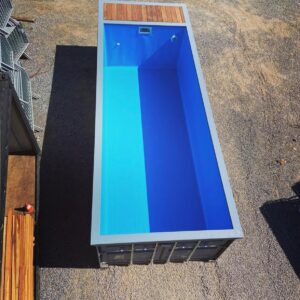
30 Ft Container Pool
$9,600.00$6,720.00 Add to cart -
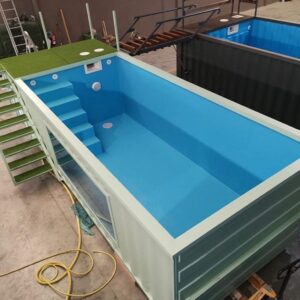
30ft Container Pool — New
$11,250.00$7,875.00 Add to cart -
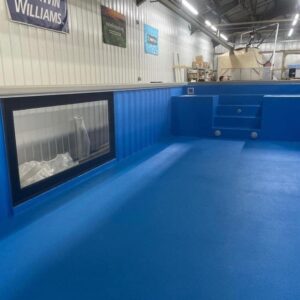
40ft Container Pool – Blue Interior
$12,000.00$8,400.00 Add to cart -
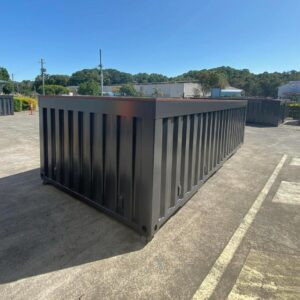
40ft Container Pool – Matte Black
$13,000.00$9,100.00 Add to cart -
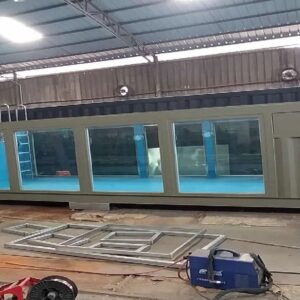
40ft Container Pool Glass Viewing Panels – Olive Green
$18,000.00$12,600.00 Add to cart -
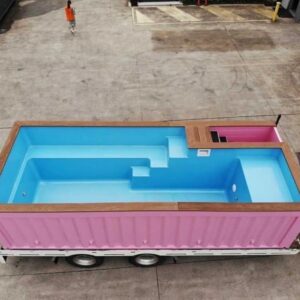
Pink 20ft Container Pool
$7,000.00$4,900.00 Add to cart