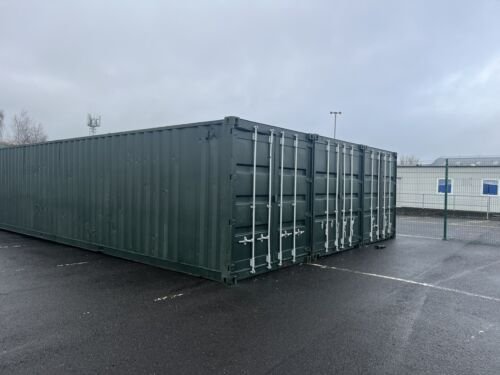
In Australia, shipping containers are mainly used as secure storage for homes, businesses, construction sites, farms and events, as well as converted into workshops, site offices, lunchrooms, first aid rooms, cafes and kitchens. The 10ft, 20ft and 40ft sizes cover most of these uses, from household storage to overflow warehousing and portable buildings.
Shipping containers are used across Australia as secure storage, site buildings and finished structures. The three common sizes, all 2.44 m wide, are:
- 10ft: 2.99 m long, about 16 m³ inside
- 20ft: 6.06 m long, about 33 m³ inside
- 40ft: 12.19 m long, about 67 m³ inside
Each size suits a different set of uses.
Internal space is what decides the use:
- 20ft standard: 5.90 × 2.35 × 2.39 m inside
- 40ft standard: 12.03 × 2.35 × 2.39 m inside
- High cube versions add 0.31 m of height
The door opening is about 2.34 m wide by 2.28 m high, so anything wider than a car will not go in. See Shipping Container Dimensions & Sizes.
What are shipping containers used for in residential storage?
Residential storage is the most common use, and the 10ft and 20ft sizes do most of that work: a 10ft unit takes a 2.99 × 2.44 m footprint and holds about 16 m³, a 20ft holds about 33 m³. Homeowners use them for the things that will not fit in a garage or shed.
Shipping containers provide a secure environment for storing:
- Household furniture
- Seasonal items
- Sporting equipment
- Gardening tools
- Outdoor furniture
- Personal belongings
The door opening is about 2.34 m wide by 2.28 m high, so a fridge, a lounge suite or a motorbike goes in with room to spare, and the steel shell and lockable doors keep it dry and secure.
How do businesses use shipping containers for storage?
Businesses across various industries use shipping containers to store inventory, equipment, and supplies.
A 40ft container holds about 67 m³ on a 12.19 × 2.44 m footprint, twice the capacity of a 20ft. Businesses use them as overflow warehousing beside the building, stocked and accessed from the yard rather than through the premises.
Common business storage applications include:
- Retail inventory
- Packaging materials
- Tools and equipment
- Spare parts
- Archived documents
- Event supplies
What are shipping containers used for on construction sites?
Construction projects often require secure storage for equipment, tools, and building materials.
On a construction site the container is set down on firm, level ground and becomes the tool store. A 20ft weighs about 2.2 t empty and a 40ft about 3.8-4.0 t, so the ground underneath has to bear that before any load goes in. See Preparing Your Property for Shipping Container Delivery.
Items commonly stored in construction containers include:
- Power tools
- Safety equipment
- Building materials
- Machinery components
- Site documentation
How are shipping containers used in agriculture and farming?
The agricultural sector has also embraced shipping containers as practical storage solutions.
Farmers and rural property owners use containers for:
- Feed storage
- Machinery parts
- Fencing materials
- Tools and equipment
- Seasonal supplies
On a farm the 10ft (2.99 m) and 20ft (6.06 m) sizes sit beside a shed or in a paddock corner; a 40ft needs a 12.19 m clear, level run to set down. Feed, fencing and machinery parts stay dry in a box that locks.
How are shipping containers used as workshops and hobby spaces?
Many Australians are transforming shipping containers into workshops and hobby spaces.
A container can provide a dedicated area for:
- Woodworking
- Metalworking
- Vehicle maintenance
- Craft projects
- Equipment repairs
Depending on the intended use, containers can be modified with lighting, insulation, ventilation, and electrical systems to enhance functionality.
How can a shipping container be modified?
Ready-modified units listed by BWContainers include:
- Site offices
- Switchrooms
- Lunchrooms
- Change rooms
- First aid rooms
- Container cafes and kitchens
- Gas cylinder stores and explosives magazines
- 20ft, 30ft and 40ft container pools
- Portable cabins from 8ft to 16ft
Containers can be customised for a variety of purposes, including:
- Site offices
- Portable workspaces
- Storage facilities
- Equipment rooms
- Temporary structures
Before undertaking any modification project, customers should ensure that all work complies with applicable local regulations and requirements.
How are shipping containers used for events and temporary storage?
Events often require temporary storage for equipment, merchandise, and operational supplies.
Shipping containers are commonly used to support:
- Community events
- Sporting events
- Festivals
- Markets
- Trade shows
Delivery is a flat $200 Australia-wide and takes about 7-10 business days (see Shipping Policy). An event container typically follows these steps:
- Ordered weeks ahead
- Set down on site
- Moved or sold on when the event is over
How are shipping containers used in industrial storage?
Industrial businesses frequently rely on shipping containers to store equipment, machinery components, and operational materials.
Common industrial uses include:
- Equipment storage
- Maintenance supplies
- Spare parts inventory
- Project materials
- Operational support equipment
Why are shipping containers so popular in Australia?
Several factors contribute to the popularity of shipping containers throughout Australia.
How durable are shipping containers?
Shipping containers are built to withstand demanding transportation environments, making them durable for long-term use. See Shipping Container Maintenance Tips for Long-Term Performance.
What sizes do shipping containers come in?
Standard sizes, all 2.44 m wide, are:
- 10ft (2.99 m)
- 20ft (6.06 m)
- 40ft (12.19 m)
- 45ft (13.72 m)
Standard height is 2.59 m and high cube is 2.90 m. Internal volume runs from about 16 m³ in a 10ft to about 86 m³ in a 45ft high cube.
How do you choose the right shipping container?
The ideal container will depend on several factors, including:
- Available site space
- Intended use
- Storage requirements
- Budget
- Delivery access
See How to Choose the Right Shipping Container Size for Your Needs.
Shipping Containers from BWContainers
BWContainers supplies new one-trip and used containers in the following sizes, plus modified units, cabins and pools:
Delivery is Australia-wide for a flat $200 in about 7-10 business days (see Shipping Policy). Used stock is graded wind and watertight, cargo-worthy or as-is, so the condition is stated before you buy.
See New vs Used Shipping Containers: Which Option Is Right for You? or How to Choose the Right Shipping Container Size for Your Needs for help deciding what to order.
Frequently asked questions
Can you live in a shipping container in Australia?
Container homes and accommodation units exist, but a container used as a dwelling is subject to building approval, and requirements differ by state and council. Insulation, ventilation, egress and services all need to meet the relevant standards. Treat it as a building project with council involvement, not as a container purchase.
Are shipping containers secure for storage?
A steel container with a lock box fitted is one of the more secure storage options available, which is why they are used on construction sites. The weak point is the padlock rather than the structure, so a lock box that shields the shackle and a high-security padlock are worth specifying.
Can a shipping container be used as a workshop?
Yes, and it is a common conversion. The practical requirements are ventilation, lighting, power and usually insulation, since an uninsulated steel box gets very hot in Australian summers. A high cube gives useful extra headroom once a ceiling is lined.
What can you store in a shipping container?
Most dry goods, provided condensation is managed: household furniture, business stock, tools, machinery and materials. Items sensitive to moisture or temperature need ventilation, insulation or a refrigerated unit. Dangerous goods have their own storage requirements and need purpose-built units.


Leave a comment