40ft shipping containers are the largest standard size in common use, giving roughly 67 cubic metres of lockable, weatherproof space in a single unit. They suit bulk storage, machinery, palletised stock, site storage and container conversions — anywhere one large container beats several smaller ones. BWContainers supplies new one-trip and used 40ft containers, delivered Australia-wide.
40ft container dimensions. A standard 40ft container measures 12.19 m long by 2.44 m wide by 2.59 m high externally, with an internal space of about 12.03 m by 2.35 m by 2.39 m — roughly 67 cubic metres. The door opening is about 2.34 m wide by 2.28 m high. A 40ft high cube shares the same length and width but stands 2.90 m tall externally, giving about 2.70 m of internal height, a 2.58 m door opening and roughly 76 cubic metres. Empty weight is about 3.8 tonnes for a standard unit and 4.0 tonnes for a high cube, and maximum gross weight is 30,480 kg for both. Figures are nominal and vary slightly by manufacturer and build year. Full comparisons across every size are in our shipping container dimensions guide.
Standard or high cube? The extra 300 mm of a high cube is the difference between standing racking upright inside and not. It also leaves room to insulate and line the interior while keeping usable headroom, which is why most conversions start with a high cube. The trade-off is transport height, so confirm access clearances and any height limits on the delivery route. For plain storage of boxed goods at floor level, a standard 40ft is usually sufficient and easier to place.
20ft or 40ft: the weight trap. A 40ft container is the cheaper way to buy volume — it costs less than two 20ft units for roughly double the space of one. But maximum gross weight is 30,480 kg for both sizes, and a 40ft is heavier when empty, so it actually carries less payload than a 20ft. The practical rule: for bulky, light goods the 40ft wins on volume. For dense loads such as tiles, stone, machinery or documents, two 20ft containers carry more total weight and are far easier to place on a tight site.
Condition grades. Condition is the largest single influence on price. New or one-trip containers have made a single loaded voyage, with intact paint, minimal wear and a full service life ahead — the usual choice where the container will be visible or converted. Cargo-worthy units are certified fit for further shipping, and are the grade to buy if the container will travel again. Wind and watertight units are structurally sound and keep weather out, with cosmetic marks and surface rust expected; this is the value option for static storage. As-is units are sold with a known fault and priced accordingly, which is fine when the fault does not affect your use. Choosing a grade above what the job needs is the most common way buyers overspend — our new versus used comparison works through the decision.
What fits in a 40ft container. As a rough guide, a 40ft container holds the contents of a three to four bedroom house, or around 20 to 22 standard Australian pallets floor-stacked in a single layer. Actual capacity depends heavily on packing and on whether you can stack. Racking or shelving typically adds far more usable capacity than moving up a size, because floor-stacked goods waste most of the available height.
40ft container types. Beyond the standard dry box, 40ft units come as high cubes for racking, conversions and tall loads; refrigerated containers with an integrated refrigeration unit; open tops for crane loading from above or over-height cargo; side opening units giving full-length access where forklift access to the end doors is impossible; flat racks for oversized loads that will not fit inside a closed box; and modified containers converted into offices, workshops and change rooms.
Delivery and site access. A 40ft container is the hardest standard size to place, and access is where most orders run into trouble. Allow roughly three times the container’s length in clear, straight approach for a tilt-tray delivery, plus room for the truck to manoeuvre — considerably more than a 20ft needs. Check overhead power lines and tree cover on the final approach, especially for a high cube. The ground must carry a loaded truck without rutting, and the container must sit level so the doors keep working. A tilt-tray drop is the cheapest placement; a crane lift costs more but reaches positions a truck cannot. Where access will not take a 40ft, two 20ft containers usually solve it. Our delivery preparation guide covers siting, footings and drainage in detail.
What affects the price. Size, condition grade, delivery distance, placement method, any modifications, specialised types and current market conditions all feed into the figure. Current pricing for each unit is shown against the individual containers below, and delivery is quoted for your address. Our guide to container prices explains each driver so you can compare quotes properly.
What are the dimensions of a 40ft shipping container? A standard 40ft container is 12.19 m long, 2.44 m wide and 2.59 m high externally, with about 67 cubic metres of internal volume. A 40ft high cube is the same length and width but 2.90 m high, giving roughly 76 cubic metres.
How much weight can a 40ft container hold? Maximum gross weight is commonly 30,480 kg, which includes the container’s own tare weight of roughly 3.8 tonnes. That leaves about 26.7 tonnes of payload — less than a 20ft container, because the 40ft is heavier when empty.
How much space do I need for a 40ft container delivery? Allow roughly three times the container’s length in clear, straight approach for a tilt-tray delivery, plus manoeuvring room for the truck. If that space is not available, a crane lift may be required, or two 20ft containers may suit the site better.
What is the difference between a 40ft standard and a high cube? About 300 mm of height. A high cube is 2.90 m externally against 2.59 m, giving roughly 2.70 m internally instead of 2.39 m, and around 9 cubic metres more volume at the same footprint.
Can a 40ft container be delivered anywhere in Australia? We deliver Australia-wide. What varies is the practicality of the final placement rather than the distance — confirm approach, turning space and ground conditions at the destination before ordering.
Should I buy new or used? For static storage where appearance does not matter, a used wind and watertight 40ft gives the same practical result for considerably less. Buy new or one-trip when the container will be visible, modified, or shipped internationally again.
Browse the 40ft containers available below, or tell us your postcode and what you are storing and we can recommend a size, condition and delivery method.
Delivery. Flat $200 delivery Australia-wide, about 7-10 business days. That is one national rate rather than a price that changes with your postcode. Where a site needs a crane lift rather than a standard delivery, tell us the access and we will confirm what is involved.
Showing 1–16 of 31 results
-
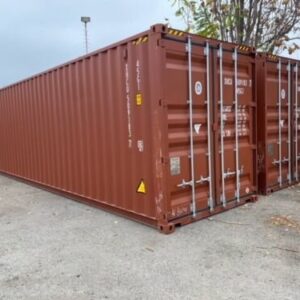
40 Ft Hc One Trip Shipping Container Bakersfield
$7,000.00$4,900.00 Add to cart -

40 Ft HC Shipping Container
$6,300.00$4,410.00 Add to cart -
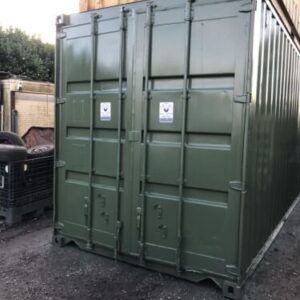
40 Ft Hi Cube Shipping Container
$2,700.00$1,890.00 Add to cart -
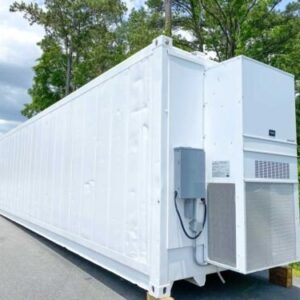
40 Ft High Cube Insulated Shipping Container With 5 Ton Bard HVAC Unit
$9,500.00$6,650.00 Add to cart -
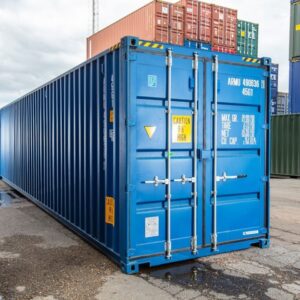
40 ft Standard Shipping Container
$5,800.00$4,060.00 Add to cart -
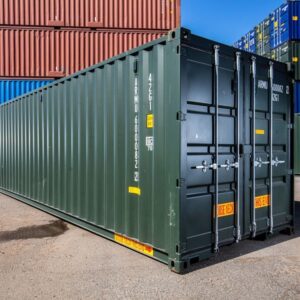
40 ft Tunnel Shipping Container
$5,600.00$3,920.00 Add to cart -

40ft Climate Controlled Storage Container | Secure & Dry
$14,074.00$9,851.80 Add to cart -

40ft Dry Container – New One Trip, ISO-Certified
$11,300.00$7,910.00 Add to cart -

40Ft High Cube Shipping Container
$4,500.00$3,150.00 Add to cart -

40Ft High Cube Shipping Container
$4,500.00$3,150.00 Add to cart -
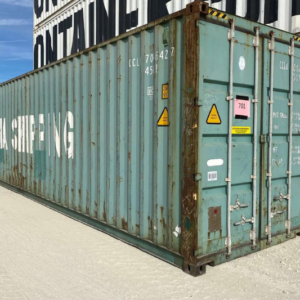
40ft High Cube Shipping Container – Used Wind & Watertight – Direct Ship
$3,200.00$2,240.00 Add to cart -

40ft High Cube Shipping Container — Cargo Worthy — Used
$6,300.00$4,410.00 Add to cart -

40ft High Cube Used Shipping Container – Wind & Watertight
$5,800.00$4,060.00 Add to cart -
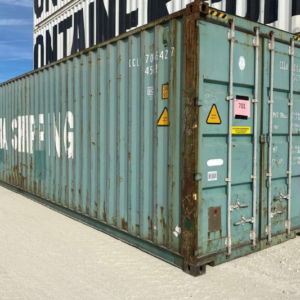
40ft High Cube Wind & Watertight Container — Direct Ship — Used
$3,200.00$2,240.00 Add to cart -

40ft New High Cube One-Trip Double Door Shipping Container – Beige
$6,250.00$4,375.00 Add to cart -
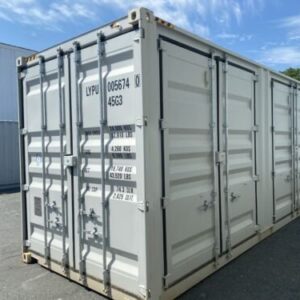
40ft New High Cube Open Side Shipping Container One-Trip – Cream
$14,000.00$9,800.00 Add to cart